



Quote of the day
“Whisky now belongs not to the Scots but to the world at large.”
What's New
-


 Old & Rare
09 October 2019
Old & Rare
09 October 2019
Rare Batch 76
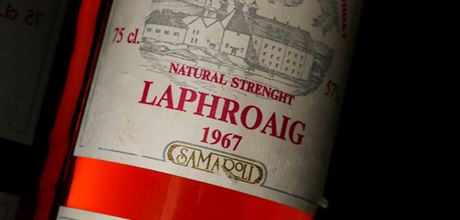
A mixed bag of single malts, regions and styles, including Glenlossie, Jura and Laphroaig.
-
Latest news
08 October 2019
Whyte & Mackay to give away 50 Year Old
The £5,000 bottles of blended Scotch whisky will be given away as part of a competition.
-
Latest news
07 October 2019
Auction raises £370k for cancer charity
The online sale of rare bottles donated by the industry will help fund the Beatson Cancer Charity.
-
Latest news
07 October 2019
Dalmore teases new travel retail whiskies
The Highland distillery will release three new single malts inspired by King Alexander III.
-
Latest news
07 October 2019
Kininvie Works unveils experimental whiskies
Kininvie’s first experimental whiskies include a rye, triple-distilled malt and single blend.
-
Latest news
07 October 2019
Music inspires Macallan Concept No.2
Macallan’s whisky maker used his love of DJing house music to create the single malt.
-

The Glenlivet capsules: why the hysteria?
What’s more outrageous: cocktails served in capsules or the fact it’s a Scotch? asks Becky Paskin. Read More -

Scotch whisky’s World Class evolution
The global bartending competition has placed Scotch flavour at its heart, writes Dave Broom. Read More -

A good story just adds to whisky’s pleasure
When whisky has a compelling tale to tell, says Richard Woodard, we should all lend an ear. Read More
-
Cocktails
02 October 2019
11 Best London Cocktail Week whisky events
From Scotch blending sessions to funky Bourbon BBQ parties, LCW has it all.
Magazine
-
Latest news
07 October 2019
Royal Brackla to revamp whisky range
The Highland distillery will launch new 12-, 18- and 21-year-old whiskies in 2020.
-
Latest news
04 October 2019
Highland Park reintroduces 21 Year Old malt
The Orkney distillery will re-release the age statement for the first time in 10 years.
-
Latest news
04 October 2019
Midleton Very Rare 2019 edition released
The latest in the Irish whiskey series contains some of the oldest liquid used so far.
-
Latest news
03 October 2019
Auchentoshan overhauls travel retail range
The Lowlands distillery has replaced two of its single malt whiskies with new expressions.
-
Latest news
03 October 2019
GlenAllachie reveals six cask strength malts
The launch coincides with the two-year anniversary of the distillery’s takeover by Billy Walker.
-
Latest news
03 October 2019
Scotch targeted by ‘damaging’ US tariffs
The United States is enforcing a 25% import tariff on single malt Scotch whisky imports.
-
Latest news
03 October 2019
Wemyss debuts Batch Strength Nectar Grove
The high-strength Madeira-finished blended malt is adorned with a label echoing Madeiran art.
-
Latest news
02 October 2019
Chivas creates Manchester United whisky
A blended Scotch has been created in honour of the English football club and its former manager.
Video
-
3:34 Magazine 06 July 2018
Port Ellen revival is ‘deeply meaningful’
Georgie Crawford discusses plans for bringing Islay’s Port Ellen distillery back to life.
-
4:30 Magazine 22 May 2018
How Macallan built its new distillery
Right from the start, Macallan’s new home was never going to be just another distillery.
-
4:30 Magazine 19 February 2018
John Campbell: Laphroaig expansion on way
Laphroaig’s distillery manager speaks about plans to increase the production of peated single malt.
-
4:17 Magazine 28 November 2017
Jim McEwan reveals Ardnahoe distillery plans
Ardnahoe’s production director reveals plans for Islay’s ninth distillery.
Whiskypedia
-
Brand
Johnnie Walker
The biggest, and most iconic, blended Scotch whisky is recognisable the world over.
-
Distillery
Glasgow
Glasgow’s first standalone malt distillery for over 100 years has its own ‘metropolitan’ style.
-
Distiller & blender
Tomatin Distillery Company
Owner of Tomatin distillery and producer of Antiquary, Talisman and Cù Bòcan whiskies.